
About Us
In the News
2026
News List
-
May

Kindergarten Graduation
CLICK HERE to view the photos from Kindergarten Graduation.Read More -

Lower School Awards
CLICK HERE to view photos from the Lower School Awards Ceremony!Read More -
Thank You
Read MoreDear Preschool Families,
Thank you for sharing your precious children with us this year. It has been such a joy and honor to be entrusted with their early education and to spend our days learning, exploring, wondering, and growing alongside them.
What a beautiful year it has been in Preschool. Together, we traveled to outer space, explored the Great Wall of China, studied birds and ponds, investigated ramps and things that fly, cared for animals through veterinary play, and followed the curiosity sparked by Curious George and so many other beloved stories. We spent countless hours learning and playing on the Prairie, where children climbed, built, created, experimented, and discovered the joy of being outdoors together.
Our students sang with confidence in Music, learned colors and counting in Spanish, strengthened their bodies and teamwork skills in P.E., explored creativity and problem solving in Makerspace, and developed a love for stories and literacy through the wonderful books shared in Library. We gathered together for Preschool Chapel, sang our favorite Fun Friday songs, and built special memories as a community throughout the year. We also ventured beyond campus on special field trips to places like The Little Gym, the Museum of the Southwest to meet a sloth, the airport, and more, giving our students meaningful real-world experiences connected to their classroom learning. We are also so grateful for our cafeteria team, who cared for our children each day with warm meals and kindness.
Most importantly, we watched your children grow in confidence, independence, friendships, creativity, and joy. The growth that happens during the preschool years is remarkable, and it has been a gift to witness. Thank you for your partnership, support, and trust throughout this school year. We hope your summer is filled with rest, adventure, laughter, and time together as a family.With love,Megan Irwin and the entire Preschool Team -

Upper School Awards
CLICK HERE to view photos from the Upper School Awards Ceremony.Read More -

5th Grade Orientation Presentation
CLICK HERE to view the 5th Grade Orientation presentation from Mrs. Myers.Read More -

Preschool Splash Day
CLICK HERE to view photos from Preschool Splash Day!Read More -

Middle School Award Photos
CLICK HERE to view photos from the Middle School Award Ceremony!Read More -

Middle School Art Show
Read MoreFamily and friends joined our talented Middle School artists to celebrate a wonderful year of creativity at the end-of-year art show. -
Baby Beluga Preschool Musical
Read More -

Upper School AP Art Show
Our Upper School art students showcased incredible creativity, talent, and hard work at this year’s AP Art Show! Each collection reflected the students’ artistic growth and personal vision. We are so proud of these talented young artists for sharing their amazing work with our community!Read More -

The Curveballs That Led Me to Trinity
Read MoreI often think back to my past. I was born and grew up in Pennsylvania. I did move a few times within the state, but the fact is that I spent nearly 5 decades there. I never had any thoughts that I would live anywhere else. But life has a way of throwing you curveballs.Within a few years’ time my daughter makes a move to Texas and gets married. My wife has a cancer diagnosis. My daughter then has our first grandchild. I still remember the brief conversation and the decision that we would also move to Texas. I think from the moment of making the decision to making the move transpired within 6 months. That move took us to the Houston area.Within a few years my son-in-law is transferred to Midland with the message that it will only be for a year or two. Well, that year or two became many years and we moved again to Midland, Texas.My life’s work had been serving in public education in Pennsylvania and then in the Houston area. I had worked in school and district leadership roles for nearly twenty years and I was ready for something new…or should I say ready to return to something from my past.I was welcomed into Trinity School of Midland to teach fourth grade and that role started 5 years of what are some of the best of my professional life. I found an environment of people that suited me well. Within a few years I was asked to take on the role of Head of Lower School. Again, it was a return to something I had done before. Again, I have enjoyed several years of great joy working with and leading a fabulous group of people.I can’t say enough good things about this community. Many people say that initially you don’t want to come to Midland, but once you are here you don’t want to leave. That is true for me and my experience in Midland and at Trinity.Many ask what I plan to do next. I don’t have a definitive answer for that. As I write this, I am still trying to coordinate the transition to the new Head of Lower School and my own personal move to The Woodlands. At my final opportunity to address the Lower School with a Chapel Talk, I shared about learning. I have always been a learner and that is what I continue to do. I will be open and curious to learn what the future holds for me.I want to thank everyone at Trinity for welcoming me, giving me opportunities and allowing for the creation of wonderful memories. I wish everyone the very, very best!! -

6th and 7th Graders Shine at Visual Arts Scholastic Event
On May 2nd, 18 Trinity 6th and 7th graders participated in the Visual Arts Scholastic Event (VASE) at Permian High School. Incredibly, every Trinity student received the highest score of a 4!! This is unheard of. And 7our students also received a State medal. Congratulations to the following exceptionally talented Artists.Read MoreReceived a 4 in Division 1:Annie BaxterMolly BaxterHenry HeinsEva JhaOlivia KarglViolet LaMonicaRaleigh LincolnRuby NunezWillsany PamboOlivia RizzutoAlice WadeReceived a 4 in Division 2:Danielle Baez - 2 scores of a 4Maggie BerryReagan BlackketterAbigail BrunnerBecca Eleanya - 2 scores of a 4T.K. OmanKelly XieState MedallistsDivision 1Molly BaxterEva JhaViolet LaMonicaWillsany PamboAlice WadeDivision 2Becca Eleanya - 2 STATE MEDALS!!!!! -
Celebrating Seniors
Read MoreOn May 22, the 36th graduating class of Trinity will cross the stage at the Barbara and George H.W. Bush Convention Center. We are looking forward to celebrating these 28 young people.Seniors’ Last Day of School / Commitment Day, May 8As a celebratory last day of school, seniors will begin the day with breakfast and an invitation to join the Trinity School Alumni Association. Throughout the day, we will prioritize some time for the things they loved throughout their time in school: Arts and Crafts, a special chapel with their first grade buddies, and some dedicated time to play their favorite PE games.We will also conduct their commitment ceremony, highlighting our 28 seniors attending 17 different colleges across nine states.The day continues with a family lunch, a parade and a “clap out.” Seeing our youngest students cheering on their older classmates is a beautiful testament to this place and these accomplishments.Leading up to commitment day, seniors had applied to 133 different colleges. Of the applications sent to colleges, seniors received 192 acceptances to 97 different colleges. As of this writing, the class has earned $7.38 million in merit-based scholarship offers.Senior Dinner, May 16When our seniors and their families gather at the Petroleum Club on May 16, faculty and staff will share testimonials, a Trinity tradition in which students select the person who will speak on their behalf. Without question, our seniors have developed meaningful relationships with all of us who teach and learn at Trinity.Baccalaureate, May 21Seniors and their families will convene at The Episcopal Church of the Holy Trinity for a special service to both honor and bless the class of 2026. Following the conclusion of Baccalaureate, families will receive their seating assignments for Commencement.Commencement, May 22Commencement will celebrate the collective accomplishments of our students. Valedictorian Audrey Li and Salutatorian Leila LaFarelle will address their classmates, Mrs. Chali Patterson will share a message with the graduates (including two of her own, Abby and Logan), and seniors earning awards will be recognized.We applaud the many achievements of this class, and look forward to highlighting them throughout these special events.Valedictorian / Salutatorian CelebrationsTrinity School of Midland is proud to celebrate this year’s valedictorian and salutatorian, two young women who will contribute positively to their chosen college communities. Though we are highlighting just two of these outstanding students, all 28 graduates are impactful, involved people. We wish them the best in the years ahead. Audrey Li - ValedictorianA student at Trinity since 2017, Audrey Li has earned the Dr. Premila Singh Johnson Valedictorian Prize. She is the daughter of Drs. James and Eileen Li.At Trinity, Audrey has been an active participant in music, from playing percussion in the band to running the Music Performance Club. She was recognized annually as a Trustee Scholar and graduates with the Challenge Scholar designation. Audrey, the beneficiary of the Rhonda Durham Award for exemplifying the ideals of the mission statement and values of Trinity, was also honored as a National Merit Commended Letter winner. The Trinity Charger Alliance Fine Arts Scholarship awardee for her extraordinary talent in the performing arts, Audrey has been recognized multiple times in all-area and all-region for percussion.Outside Trinity, Audrey has played ice hockey since fourth grade, most recently on the Dallas Stars Elite Girls 19 and under Tier 1 team. Audrey has competed on the rink with travel teams since fifth grade. She is also a founding member of Davy K, a rock/country band she and her classmates formed. They have played on live television for Basin PBS and for a live audience at the 6th Annual Basin PBS Main Street Live, opening for Wynonna Judd.Audrey has volunteered at Odessa Regional Medical Center, the West Texas Food Bank, and Meals on Wheels, accumulating more than 100 service hours since her freshman year.Audrey’s college application process culminated with acceptances to Baylor University, Boston University, University of Pittsburgh, Rice University, Southwestern University, The University of Texas at Austin (Plan II), Texas A&M University, Trinity University and Wesleyan University.“I'm going to study biological sciences on a pre-med track at Rice,” says Audrey. “I'm thrilled to attend Rice because of the great opportunities to research and shadow in the Texas Medical Center, stay involved with hockey through volunteering, and eat great food, but I'm most excited about joining the great community at Rice!”
 Leila LaFarelle - SalutatorianLeila LaFarelle, this year’s salutatorian, began her Trinity education when she was three. The daughter of Thomas and Beth LaFarelle, Leila is twin sister to Alice and big sister to sophomore Charlie.Like Audrey, Leila is a four-year Trustee Scholar and graduates as a Challenge Scholar, a designation for students committed to rigor and scholarship. She has also been recognized with a Farrell Scholarship for students who best exemplify integrity, leadership, courage and a strong work ethic. She was also part of College Board’s Hispanic Recognition Program for her sophomore year PSAT.Leila is known at Trinity for her work in STEM and as a three-sport athlete. She co-founded the Things That Fly Club, has served as a four-year member of Honor Council and Student Council, volunteered as a student ambassador, and played four years of volleyball, basketball and baseball. She also found time to take the stage in two school musicals.Outside school, Leila has played club indoor volleyball and sand volleyball. She is a four-year Midland Belles volunteer for the Symphony League and started a pickle business with her twin sister. Like Audrey, she has shared more than 100 hours of her time in the Permian Basin,With acceptances from University of Alabama - Huntsville, University of Colorado - Boulder, Embry Riddle Aeronautical University, University of Maryland, Mississippi State University, Oklahoma State University, Rensselaer Polytechnic Institute, Rochester Institute of Technology, Syracuse University, The University of Texas at Austin, and Virginia Tech, Leila plans to study at UT.“I’ll be majoring in aerospace engineering at The University of Texas,” says Leila. “I can’t wait to dive into the science and math that it involves and to just meet new people and start my life!”
 -

Field Day
Read MoreLower School had an absolute blast at Field Day! The day was filled with laughter, teamwork, friendly competition, and tons of fun. -

Preschool Musical
Read MoreTrinity Preschool presents "Baby Beluga"
A Musical Featuring Songs by Raffi
May 13, 2026, 9:00 AMBeal Gym
Please join us on the Prairie immediately after the program for our Spring Open House event. -

The Charger Times, May 4
Click Here to read the full Charger Times, written and photographed by our talented Middle School students.Read More -
April

Middle School Art Exhibit
Read More -
The Power of Playing Games
Read MoreIn late March, I was chatting with my daughter on the phone as we happily made plans for our upcoming birthday visit. Rather than talking about gifts or schedules, she was most excited about teaching us a new game. That conversation got me thinking about how much joy our immediate and extended family has shared through playing games together.When I asked my dad about his favorite game, he fondly reminisced about playing Chinese Checkers with his grandfather. As a preacher’s kid, he wasn’t allowed to play games on Sundays, which made those moments even more special. He remembered carefully guarding his treasured bag of marbles for one of his favorite games. He even learned to play chess from the choir director. My mom recalled teaching my dad to play jacks when they were just ten years old. My son, who is a firefighter, shared how important games are at the firehouse. Playing together helps break the ice, build camaraderie, and relieve the stress and tension of their demanding job. We all agreed that games are good for the brain and for the heart. These conversations reminded me of the request I make at our first parent conference each year: “Please play games with your children.”The most important reason I encourage families to play games together is relationship building. When you put your phone down and look your child in the eye, you are showing them they matter. You are taking time to teach a new skill, model good sportsmanship, guide them through rules, and engage in meaningful conversation. Your child will love learning about you and the games you enjoyed as a child. I recall that my grandmother’s favorite game was tile rummy, and we played it every time we were together. What I would give for just one more game with her! Those were the moments when I learned so much about her life, and I treasure those memories deeply.As your children grow, you will not only teach them, you will learn about them as well. During family game time, important conversations often surface. Challenges with friends, school situations, and everyday worries sometimes come out naturally around the game table. When neighborhood or school friends join in, you get to know them better too. A home where the games come out can become a safe haven and that is a very good thing.Playing games also supports social development. There is nothing worse than a sore loser or a boastful winner! These moments provide perfect teaching opportunities. Children learn to demonstrate empathy, cope with frustration, take turns, communicate effectively, and practice being good teammates. With your guidance, they learn how to navigate big feelings and build resilience.An additional benefit of playing games is that you reinforce many of the skills we are working on in preschool. Games naturally build math skills such as recognizing numbers, counting, matching, using one-to-one correspondence, and comparing quantities. They also strengthen early literacy skills as children notice letters and words within the game. They begin to understand that words have meaning and see you modeling authentic reading for a purpose.Most mornings in preschool, Mrs. Perales and I play games with our students. It is one of the best ways for them to practice what they are learning in class. I truly enjoy getting to know my students better during this time and I feel delighted when watching new skills click into place. Because many of my classroom games are educational in nature, I asked our parents to help compile a list of age-appropriate favorites they enjoy at home. One guideline I always suggest is following the manufacturer’s recommended age range. While many games can be modified to make them easier or more challenging, starting within the suggested age range helps prevent frustration.I hope you will take time to pull out a game and play together. It is a wonderful way to bring joy into your home, build traditions, and create strong bonds with your children.Parent-Recommended Games- Outfoxed!
- HABA First Orchard
- Chuckle & Roar Family Bingo
- Pressman Charades for Kids
- Zingo!
- Card games: Memory Match, Slap Jack, Old Maid, Go Fish, UNO Junior
- Candy Land
- The Sneaky, Snacky Squirrel Game!
- Chutes and Ladders
- Puppy Fuffle
- Guess Game by Vizkin
- Hi Low with a simple deck of cards
For Families with Slightly Older Children (can often be modified):- Connect Four
- Dominoes
- Mouse Trap
- Monopoly Junior
- Sorry!
- Thin Ice
-
College Advising Update: The Year in Review
Read MoreClass of 2026In the class of 2026, 28 students applied to 133 different colleges/universities with applications going to 36 states and the District of Columbia. Our students were accepted to 96 different schools.Students submitted 279 applications and received 191 acceptances. Though several students have not yet decided on their post-Trinity plans, we project that 40-45 percent of seniors will travel outside Texas for their education.Because National Candidate Reply Date is around the corner (Friday, May 1), Mr. Jones and I will provide an updated overview of this remarkable graduating class in the May 8 Charger.Class of 2027Juniors are preparing for their college application process. Over the course of this spring, they have had workshops about various facets of the work ahead, including standardized testing, resume development, teacher recommendation selection, and essay writing. Earlier this month, they were joined by Beverly Henry Wheeler, Associate Vice President for Enrollment and Dean of Admission at Austin College, for a session about writing their personal statement that focused on brand.Students should mark their calendars for our College Application Kickoff on Monday, August 3 at noon, which will include lunch, college application updates, and a senior celebration. This replaces Midnight Madness, which falls on a Friday night/Saturday morning this year, and commemorates the opening of the Common Application and the college admissions season. Provided students are ready, many of our seniors will be able to apply to one or more colleges in early August.Class of 2028Expeditionary Learning for the 10th grade class gave our students an introduction to college choice. Designed to show them public, private, large and small universities, the trip included tours of Angelo State University, St. Edward’s University, Southwestern University, The University of Texas at Austin, Texas State University, and Trinity University. Sophomores also attended a Longhorn baseball game, and the Trinity college advising and institutional advancement offices partnered to host a local alumni event at Pins Mechanical Co. in Austin.College VisitsIn late March, the DFW Admissions Regional Network (DARN) visited Trinity for a Midland Swing, four high school college fairs in our area. Our students in grades 9-11 were fortunate to visit with college counselors from across the United States.Some juniors are already visiting colleges of interest to them and will continue to do so this summer. For families of younger students, college tours can provide helpful context for the junior and senior years. If you are traveling this summer, and you will be near a college campus, you can set up an official information session and tour. Most colleges have a “Visit” tab on their websites and require students and their families to register in advance. Please note any age minimums or restrictions. -

Apollo 13
Read More“I don’t care what anything was designed to do, I care about what it can do.” - Gene KranzOn April 17, 1970 the aborted Apollo 13 mission came to a conclusion as the astronauts returned safely to Earth. It was a harrowing experience that was depicted in the movie starring Tom Hanks as Jim Lovell, the commander of the mission.Recently, I find myself looking at the Moon with a different focus. With the Artemis mission my thoughts about this ever present neighbor of ours have been multiplied and indeed, magnified.It was at the acknowledgement of the true level of the crisis being faced by the astronauts of Apollo 13 that Gene Kranz, the overall director at Mission Control in Houston, gave the above remark. The realization was that they were not going to land on the Moon and there was a great possibility that the astronauts would not make it back home. They were truly in problem solving crisis mode.I think about this from watching my father tinker with or work to fix things. Objects would be used for something they were not designed for either out of necessity or just out of convenience. I recall that the end of screwdrivers or other tools sometimes became hammers. Knives became screwdrivers. Just about anything could become a measuring tool. I still do some of that today. When out backpacking you never know what might occur and a multitool is certainly handy, but you make do with what is available sometimes because you just don’t want to carry one more thing. A great example is that a good solid rock becomes a hammer for tent stakes because nobody wants to add the weight of carrying a hammer.Apollo 13 is a great example of thinking outside the box. I too often observe students with a mindset of wanting to just get the answer. They just want the formula. Sometimes success isn’t measured just by the concluding result, but in the work of the journey to get there. It isn’t always possible to follow the recipe. Circumstances sometimes preclude doing things the prescribed way.
It may not always be advised, but the engineers at NASA had a new mission, get these men home alive. With that goal they were successful, no matter the manner in which it was done. -
Competent, Confident, and Capable
Read MoreMany of the books, podcasts, and articles that I have been reading over the past year have had a few similar underlying themes—how do we raise successful kids beyond the classroom, why are kids facing increased anxiety and seemingly decreased life skills, and how can educators and parents help equip kids for all that life has to offer beyond just grades. It is clearly a relevant topic in today’s climate.As I was discussing this with a counselor friend, we talked about how to help children gain the skills necessary for “real life” while also meeting them developmentally where they are. She laughed as she looked down at my notebook and said, “well I guess that sums it up”. She saw that I had written down in large letters “Competence = Confidence = Competence”.This isn’t a groundbreaking or new idea, it is something that has been around for what I assume is close to forever. But, I have it written on my notebook as a constant reminder because there are many times in my personal and professional life that I need the reminder that the more I try to equip the kids I work with with competence, the more confident that they will be in themselves and their abilities, and that will only lead to more competence and capability that will serve them throughout their lifetime.When I was a “baby social worker” I think it would probably bring me some joy whenever I would hear someone say “I just don’t know if they could survive {insert school, scenario, etc} without you”. Now, it makes me wince a little. I hope that every student I work with I am helping equip with skills, knowledge, and real life experience to cope with issues they face long after I am no longer in their life.Sure, there are many times that I want to email a teacher and ask for an excuse of work because of a teary circumstance, or a deadline extension on a student’s behalf—but is that really helping them if I do the legwork? What often helps them the most is when we meet with a teacher together, or write an email to their teacher together so that they feel confident that they can handle this, and if it comes up again they usually don’t need me to be a “middle man” at all. In 5th grade this seems overwhelming but if they start that skill now, they have 8 years of stacked experience and confidence by the time they get to a college classroom and have to meet nervously with a professor for the first time.Our goal is not to remove obstacles for our kids—it’s to walk alongside them as they learn how to navigate those obstacles themselves. That might mean a little more time, a little more patience, and oftentimes allowing them to feel discomfort. But in those moments, they are building something far more valuable than a perfect outcome—they are building competence.And when competence grows, confidence follows. Students begin to trust themselves, to advocate for themselves, and to believe that they are capable of handling what comes their way.So while it may be tempting to step in, smooth things over, or solve the problem for them, the greater gift is helping them learn that they can do hard things—with support, practice, and time.Because ultimately, we’re not just raising successful students—we’re raising capable young people who believe in their ability to handle life beyond the classroom.PS. Christen Timmons and I will be hosting a “Coffee + Chat with Counselors” parent event on May 11th from 8:15AM-9AM in the Chapel. We will be talking about the new book “Capable” by Sissy Goff and David Thomas and giving you a sneak peek at an exciting event coming up in the Fall here in Trinity—stay tuned for more details! -
Important Carpool Note
Read MoreAs we get closer to the end of the school year, I know routines can start to feel a bit long and everyone is a little more tired. That said, we kindly ask for your continued attention to our carpool procedures, as safety continues to be our top priority for our students, families, and team.As a reminder:- All traffic should enter the parking lot from the north (turning left into the parking lot).
- Please do not allow children to hang out of windows or sunroofs.
- Remain in your car during drop-off and allow our team to assist your child.
- When exiting the carline, please turn right.
- If you choose to park and walk in, the carline has the right of way. Please wait for cars to move forward and come to a complete stop before crossing.
- At pick-up, if you walk up to retrieve your child, please stand to the side and away from the gate so our team can safely manage the flow of students and vehicles.
- As always, please wait until all cars have stopped before crossing the parking lot.
- Please avoid using your phone while driving through the carline or when walking through the parking lot so you can stay alert to your surroundings.
I know this routine can feel repetitive, but these small details help keep everyone safe and the line running smoothly. We appreciate your partnership and attention to these details,Best,Megan IrwinHead of Preschool -
May is Mental Health Month!
Read MoreMay is recognized as Mental Health Awareness Month—a time to pause and reflect on something that impacts all of us: how we are doing, not just physically or academically, but emotionally.In Upper School, it can be easy for mental health to take a back seat. There are assignments to finish, tests to prepare for, practices and games to attend, and plans to make for what comes next. Life moves quickly this time of year, and many students are pushing through the final stretch while balancing big life decisions.But behind the busy schedules, it’s not uncommon for stress, pressure, and emotional fatigue to build.For students: if you’ve been feeling overwhelmed, unmotivated, anxious, or just “off,” you are not alone. These feelings are more common than you might think—especially during times of transition and high expectations. Mental health is not just about crisis moments; it’s about how you manage stress, cope with challenges, and take care of yourself day to day.For parents: you may notice changes in your teen this time of year—more irritability, withdrawal, changes in sleep, or a lack of motivation. While some of this can be part of normal development, it can also be a sign that your teen is feeling overwhelmed. Staying connected and checking in, even in small ways, can make a meaningful difference.So what does supporting mental health actually look like?Sometimes it can help just giving it space to be talked about. Talking about stress, emotions, and challenges in a normal, non-judgmental way helps reduce stigma and lets students know they don’t have to handle everything on their own.It also means paying attention to balance. Sleep, time away from screens, physical activity, getting sunshine, and unstructured downtime all play an important role in emotional well-being. These are often the first things to go when life gets busy, but they are some of the most important to maintain.Another key piece is recognizing when to ask for help. Whether it’s reaching out to a parent, teacher, counselor, or another trusted adult, seeking support is a sign of strength—not weakness. No one is expected to navigate everything alone. Life can be heavy, but doesn’t have to be carried alone.And finally, it’s important to remember that mental health is not about being happy all the time. It’s about having the tools to handle both the good days and the challenging ones.As we close out the school year, there is a lot to be proud of—but also a lot to process. Taking a few moments to check in with yourself, prioritizing balance, and maintaining connections, can go a long way.Mental health matters this month, and every month. -

Upper School Chess
Read MoreOn Wednesday April 15, Tax Day, Trinity hosted the second session of upper school chess.Trinity won the day with 12.5 points giving us a total of 24.5 points so far. This puts us squarely in second place. Homeschoolers earned 12 points from session 2, and they are still in first place with 27 total points. Midland Classical gained 11 points, and they are in third place with 23 total points.On an individual basis, three Trinity players are currently in the top 10: Jaxon Wilman - tied for 8th place; Joaquin Gil – also tied for 8th place; and Ollie Mathewson - tied for 2nd place.The following Trinity players went undefeated on the day: Joaquin Gil and Katie Li.I saw a couple of Katie Li’s games (first and third games of the day). In both games, Katie built up a steady lead, and then performed the ladder checkmate with ease. Nice.The final session will be next Wednesday April 22nd. We have a good chance to get first place in both individual and team contests. It should be fun.Also Saturday April 18 is the final day to sign up for the end of year city tournament. Hope to see you there. -

ISAS Art Festival
Trinity students had an incredible time at the ISAS Art Festival! They showcased their own musical performances, art, and photography, and also got to connect with students from other schools while enjoying their performances.Read More -

Kindness
Read MoreBeaver Avenue is one of the main thoroughfares leading into the town that I once lived in. A good deal of traffic would make its way into town on this road every morning. For many, many years there was a gentleman who lived along this road close to town. Every morning he was out front of his home greeting every driver as they made their way to start their day. It was a simple gesture. For him it consisted of a smile and wave. If your windows were down you might hear a greeting.I never met this man. I don’t know his name. I do know how his daily acts of kindness touched many people in the community. In fact, this man’s acts of kindness extended beyond the community to a point of others knowing of him. He left his mark on people’s lives each and every day. No matter how someone might be feeling, a smile would have to come across your face seeing this morning greeter.I once read of a man in India who lived on an island with thousands of others. Like many areas, over time the forests and trees of this area were being eliminated and destroyed. Deforestation was taking place. This man observed what was happening and on his own began to take action. He began to plant trees. He planted tree after tree for more than twenty years. A forested area slowly began to take shape and at the end of two decades an area about the size of Central Park had a thriving forest.These two examples represent gestures of kindness. The benefit is seen as going to others, but do we realize the strong satisfied feelings these gentlemen might also have as a result of their actions. Kindness is reciprocal. Those who receive it feel better. Those who give it feel better.Every time someone makes a small gesture of kindness toward another, a small connection is made. This could be pausing for a moment and holding a door for someone approaching. It could be just a smile, wave, or greeting that lifts somebody’s spirit. It could be something like planting trees that won’t really show an outcome for many years.At our school and in our community we have the opportunity to generate kindness that is similar to these examples. There are chances each and every day for the small gestures that make connections. We can hold a door. We can greet someone kindly.
We can also take the “long view.” What we do each day with students and others that we come in contact with can be looked upon like the planting of a tree. We may not see the fruit, or we may not get the shade for many years to come, but what we do each day is important in the growth and development of students and in the lives of others.
Simple acts of kindness can make a difference for those around you. Practicing kindness can make a difference for YOU. -
Student Council Update
Read MoreThe Upper School Student Council is beyond grateful for the incredible support from our Trinity community this year—it’s been nothing short of amazing!Thanks to the success of our fall sales—t-shirts, sweatshirts, and Pink shirts—we kicked off the year in a big way and made Homecoming Week truly unforgettable! From exciting activities and social events to an epic Rock ‘n’ Roll–themed dance, the energy was unmatched.We kept that momentum going into the winter season with a hugely successful No Uniform Day fundraiser, bringing together over 600 participants! And the excitement didn’t stop there—nearly 800 Valentine’s were sold and hand-delivered by the Class of 2026, spreading joy and chaos across campus while supporting the upcoming Upper School Prom at Greentree Country Club next weekend.Our Student Council members have worked tirelessly to make each event bigger and better, and none of it would be possible without the enthusiasm and generosity of our Trinity community. Thank you for making this year so memorable—we can’t wait to see what’s next!Forever Coordinating Chaos,Sonja Erlandson -

The Seeds We Plant
Read MoreRecently, our school came together for an all-school chapel followed by a day of service. Students heard from local nonprofit partners and then stepped into that work in tangible ways: assembling appreciation bags for members of law enforcement, creating self-care kits and coloring Bible verses for our unhoused neighbors through The Field’s Edge, and making bookmarks for children at Rays of Hope.One of the most meaningful parts of the day was watching students work in their Corral Pal groups. There is something powerful about seeing a mix of ages come together with a shared purpose.As the Head of Preschool, my days are spent with our youngest learners, students who are just beginning to understand what it means to be part of a community, to take turns, to help a friend, to notice when someone needs support. These are small beginnings, but they matter.That is what made this day stand out.I had the opportunity to watch our middle and upper school students step into those same ideas in a much bigger way. Supporting younger students is not always easy, and yet there was patience, encouragement, and a steady presence that made a difference. You could see it in the way the younger students responded, how they looked up to them, how eager they were to be included, how proud they felt to be part of something alongside the “big kids.”For our middle and upper school students and families, I hope this day serves as a reminder that the things we begin in the earliest years do not stay small. They grow. The way our older students showed up for their Corral Pals reflects habits of care, responsibility, and awareness that started long ago and continue to take shape.And just as importantly, the example they set now becomes part of what our youngest students are learning. They are watching. They are noticing. They are beginning to understand what it looks like to belong to a community that cares for others.Days like this remind us that growth is not just academic. It is found in the way students learn to see beyond themselves, to support one another, and to step into something larger than their own experience.
Megan Irwin, Head of Preschool -
8th Grade Special Chapel Service
Read MoreEighth Grade Families,We are pleased to invite you to a special service honoring our Eighth Graders on Tuesday, May 12th, at 11:30 a.m. in The Beal Gym. During this service, we will share a presentation of memories, including a baby picture of each student, hear a message just for them, and give a special welcome to Upper School. There will be a small reception in the gym foyer immediately following. This is always a meaningful day, and we hope you can join us.Please feel free to reach out if needed.Blessings,Chrystal and Shannon -

Easter Art
Students (Kindergarten and 1st grade) created a sculpted Easter Bunny, focusing on form as an important element of art. They explored texture by adding line details and completed their work by carefully coloring the final piece.Read More -
Trinity History Comes Alive
Read MoreLast year my contribution to this newsletter mentioned an end of trimester project in the Middle School that we were proud of. This year, that project took off in a big way. We were excited that Kodi Dixon, one of our outstanding Middle School educators, sought out and secured a presentation spot at the 105th Annual Conference of the National Council for the Social Studies (NCSS), held December 4–6, 2025, in Washington, D.C. We have been able to send teachers to this event as observers and learners for several years and this year, Head of the Middle School, Chrystal Meyers accompanied Kodi, the presenter, on the trip.Kodi shared the vision and success of Trinity’s Middle School, Living Museum. This is an end-of-Trimester 1 project and student favorite that she has led with enthusiasm and creativity for the past four years. In this hands-on assignment, our 7th and 8th-grade students step into the roles of influential figures from history. Working within specific chronological parameters, they research a notable person, create a costume, and prepare engaging and informative presentations . During the Living Museum event, parents and visitors travel through history in the Commons, meeting and learning directly from these characters about their lives, contributions, and lasting impact.At the NCSS Conference, Kodi presented to a large and enthusiastic crowd of social studies educators from across the country. She spoke for nearly two hours, fielding questions and sharing practical insights as attendees continued to stream in. Her energy, creativity, and unwavering commitment to students clearly resonated—many left inspired to adapt similar experiences in their own classrooms.In Kodi’s own words: “NCSS was an unforgettable experience. Sharing my passion for the Living Museum with educators eager to inspire their own students was both energizing and affirming. Connecting with fellow history enthusiasts from across the country is one of my absolute favorite things, and it reminded me why I love what I do.” We are proud of Kodi for representing Trinity School of Midland so beautifully on the national stage. During Spring Break, another social studies related activity affected our students. Kodi Dixon, Todd Freese, his wife Melissa, Sonja Erlandson, and Terry Miller took a group of students to Washington, D.C. Todd, who teaches The Presidents, the Civil War, and World Cultures, is to be congratulated for completing his Masters degree in history earlier this year. Their trip was weather delayed in starting for a couple of days, but it all worked out to leave Midland on Monday. While in D.C., the group was able to tour the Capitol with the special help from an intern with Congressman Pfluger’s office. The group also visited the Museum of the Bible, two of the sections of the Smithsonian, the National Archives and Mount Vernon. It was a lot to pack into a short week and they walked miles a day, but it was a great experience for all of those who made the trip. These powerful, hands-on experiences bring classroom lessons to life and deepened our students’ understanding of American history, government, and civic heritage. This seems especially relevant in our nation's year of celebrating its 250th anniversary.
 -
March

Community Service at Trinity
Read MoreAsk a group of Trinity seniors where they completed their community service hours, and you will not get one answer. You will get dozens. You will hear about churches, hospitals, camps, theaters, or other organizations they have been a part of for years.Some students started with a clear sense of purpose while others had no idea what they were looking for. And that is exactly the point. Community service at Trinity is designed to give students the space to figure that out.The class of 2026 has contributed 4,139 hours of service over the past four years, a remarkable total for a class of just 28 students. Across the Upper School, students have logged 8,607 hours. But those numbers only matter because they represent a student who showed up, tried something new, and kept going long enough for it to become meaningful.For senior Katie Mattimoe, her journey of service began early. She started volunteering in the children’s ministry at her church, The Bridge Odessa, in sixth grade, initially helping alongside her mom. Over time, that experience grew into something much more. She built relationships with families, watched children grow, and became a trusted member of that community. One of the most meaningful moments for her came when a parent asked her to babysit outside of church, a relationship she has maintained for years. Through these experiences, Katie has developed a strong appreciation for community and connection, something she now considers a priority and hopes to find again when she goes to college.Senior Mira Rakesh found her path through hospital volunteering. Her work at Odessa Regional Medical Center and Medical Center Hospital introduced her to an environment where she has seen the role compassion plays in healthcare. As she shared, “No matter how small the role, every act of service makes a difference in a patient’s life.” Beyond that, she has developed consistency and adaptability through regularly showing up and contributing. Just as importantly, she found herself part of a community outside of school, one that has influenced both her perspective and her future goals. Mira, like Katie, will continue to volunteer during college.Senior Evan Cheng has taken a different approach through his long-term involvement with the Boy Scouts of America. Since joining in 2013, he has participated in service projects that each bring their own purpose and story. One of his most significant contributions was his Eagle Project at the 1-20 Wildlife Preserve, now known as Waterson Wild Space. Over the course of several months of planning and nearly a month of daily work, Evan led the renovation of an insectarium. His project included structural repairs, installing new roofing to allow natural light, rebuilding garden beds for native wildflowers, and restoring display elements to make the space functional and educational again. Through experiences like this, he has gained a deeper appreciation for the world around him and developed a strong sense of responsibility for the environment and his community.Senior Audrey Li’s experience reflects another common starting point. She began volunteering at places like the West Texas Food Bank and Meals on Wheels simply to fulfill her service hours. However, those experiences quickly became more meaningful as she realized the direct impact of her work. At the food bank, she found satisfaction in the constant activity, whether assembling boxes, sorting donations, or distributing food. At Meals on Wheels, she saw firsthand the impact that delivering meals directly to individuals made. Her perspective shifted even further when she began volunteering at Odessa Regional Medical Center while exploring an interest in medicine. One experience that stood out involved helping an older woman navigate multiple buildings for an appointment. Although it was not part of her assigned role, Audrey chose to walk with the woman, return with her, and assist her until everything was resolved. While the situation was at times frustrating, it was also deeply rewarding. Audrey reflected, “The thing I liked the most about community service is feeling like I make a difference in people’s lives, even if it is small.”None of these students found their “thing” immediately. When asked what advice they had for students looking to find a place to volunteer, they offered this: try different opportunities, give them more than one chance, and look for connection, something that often develops with time and consistency.MobileServe supports this process, not just by tracking hours, but by giving students a way to reflect on how they are spending their time. Over time, those entries become a record of growth, showing students where they have invested their energy.At Trinity, service is intentionally varied. Students are encouraged to explore, to commit, and to discover what matters to them. For underclassmen, the message is simple. Start somewhere, go back a second time, and pay attention to what feels meaningful. The goal is to find something that stays with you. By the time you are a senior, the number of hours will matter far less than what you have gained from them. -

Empty Bowls
Read MoreThe Empty Bowls Club in Upper School has spent the year making and glazing bowls that were donated to the Midland/Odessa Empty Bowls event to raise money for the West Texas Food Bank. The event will take place March 28th at Midland College's McCormick Gallery from 11:00 am - 1:00 pm.
-
Just Read
Read MoreTo improve as a runner you need to run. To improve as a pianist you need to play the piano. To improve at baseball you need to play baseball. To improve as a reader you need to read.There is no doubt that the volume of reading done by a child contributes to developing vocabulary, increasing background knowledge on a variety of topics and building stronger comprehension.“Reading volume is critical because it provides opportunities for vocabulary growth, knowledge acquisition, and the development of fluid word recognition” - Anne E. Cunningham & Keith Stanovich, 1998.This research is solid, but what is also solid is the fact that overall reading volume by students across the country is decreasing. The reading occurring today is more likely to be of shorter pieces. The reading of full books has declined. Students are reading less by choice and reading less volume.“Many students no longer arrive at college - even highly selective elite colleges - prepared to read books” - R. Horowitz, 2024.Frequently reading and reading by volume provide the opportunities for students to build what makes future reading easier. Without this, students do not have the repeated exposure to ideas, language, and vocabulary that will help develop their abilities that make reading feel natural and not exhausting.By choosing to read by choice, by reading frequently, and having a high volume of reading students develop:Fluency - accuracy, automaticity, and prosody which all together support comprehension by freeing the cognitive processes to making meaningStamina - reading becomes easier and is done for pleasure and not as a chorePrior Knowledge and Vocabulary - comprehension depends on this and it is accumulated through reading extended texts or booksIn conclusion, just read! -
Behind the Scenes: Making Club Day Happen
Read More
Middle School students love Club Day. Each trimester, we step away from academics for a full day to allow students to explore different skills and activities that aren’t typically offered in the classroom – friendship bracelets, quilting, yoga, or board games, just to name a few. Prior to Club Day, students share their desired club selections and cross their fingers, hoping they’ll get into their top pick. But how is that determined? What goes into planning these clubs? Let’s take a peek behind the scenes to see what brings club day to life.Choosing DatesThe Clubs Committee, taking input from the Middle School staff, selects a date in each trimester to host clubs. A few years ago, we realized Halloween is the perfect date for Trimester One, but the second and third trimesters offer us a bit more flexibility. This trimester, clubs will be held on Tuesday, March 31, the same day as All-School Chapel and the BIGG Corral Pals Service Day. Sometimes it’s as easy as asking, “Can we stack this with something else?” which is how we nailed down our T3 date.Choosing Clubs & Ordering SuppliesAfter dates are nailed down, MS teachers begin brainstorming ideas for potential clubs. What grades can participate? Where can the club be held? How many students can I host in one round? Many teachers choose to host a club for a creative hobby they participate in themselves, such as Mrs. Rich, who has taught many students to crochet, or Coach Garos, who shared her pickleball prowess in T2. Other teachers have harnessed the power of AI to help come up with new and fresh ideas that Middle School students will love.Once ideas are nailed down, teachers determine supplies they need and send requests to Ms. Erlandson. She orders supplies, but also plans snacks for students for during the day – think donuts or popsicles! Without her, Club Day would not run as smoothly as it does.Mrs. Lemons’s MagicMrs. Lemons is the true magician of the Clubs Committee. With a few mouse clicks and formula entries into Google Sheets, she is able to plan our entire day, down to the minute. She keeps in mind crossover teachers who have classes in other divisions or any breaks for teachers that need to be planned. The spreadsheet is truly where the magic happens. Placing Students in ClubsAfter space and schedules are planned, students make their selections and the Clubs Committee begins placing students in clubs. While exceptions always have to be made, many students end up in exactly the clubs they want, effectively planning their entire day of fun activities!Go-TimeOn Club Day, students receive their schedule for the day and shoot off to their various locations. Fifth graders spend time in clubs with eighth graders and new relationships are developed across the division. It’s a fast and furious, but fun day for the students. As you can see, a lot of work takes place behind the scenes, but it always ends up worth it, as many students would say these are their favorite days of the year.Trimester ThreeIn Trimester Three, teachers get a short reprieve from the planning part of clubs by way of a pre-planned rotation. Advisories group up and rotate through activities such as kickball, pickleball, Easter Olympics, and volleyball. This allows for team building across grade levels and advisories, and makes the life of a Middle School teacher in T3 just a little easier.Club Day is always a big commitment – for students and teachers alike – but one that helps us fulfill the mission of Trinity School in a different and rewarding way.
 -

You're Invited!
Read More -

Spring in the Upper School
Read MoreWith Spring comes the anticipation of Summer and hopes for things to come. As our Seniors count down the days to graduation, we are also in full preparation mode for the 2026-2027 school year at Trinity. There are always lots of logistics to sort and arrange. This involves many individual conversations about schedules and plans, hopes and dreams. These conversations are both necessary and rewarding.The beginning of Spring also means that we have successfully executed our Expeditionary Learning Adventures. These experiences are always a highlight of the school year because of their unique educational, team-building, and memory-making values.However, as much as we look forward to things to come it is important to prioritize the present. The next nine weeks present many opportunities for ambitious teaching and learning, self-reflection, and growth. But hold on tight, these weeks will fly by and the school year will be a distant memory soon. -
Batting Practice
Read MoreLast Spring I helped out at my grandson’s baseball team practice. Basically, it was a batting practice and I was a designated pitcher for the duration. The kids were all about 8 years old or so. Some could hit nearly every pitch and some hit with authority. Some could hit most of the pitches. A few struggled to make any contact. Some had a batting stance and a swing like a future baseball player. Some…well, did not.What I observed was that each young player was proud of what they did at the level they were at. A few were disappointed if they hit a weak pop-up, but beamed when they struck the ball solidly with that familiar “ping.” Most were excited when stringing together good contact over several pitches in a row. A few felt accomplished when the bat hit any part of the ball. A few times I was focusing on where the child swung and I tried to throw the ball to their swing.Isn’t this scenario about all of us in this life? Depending on what we are doing, some are trying to consistently drive the ball back up the middle with authority. Others are just trying to make any kind of contact at all.It takes time. It takes patience. Very few are accomplished at something on the first try. Not even the second, third, fourth, etc. Malcolm Gladwell discussed the theory of 10,000 hours to master something. That’s a lot of swings.I applauded each batter for what was accomplished. I wanted each of them to leave the practice feeling some kind of success. I gave a few pointers here and there that hopefully can help. Don’t we all need that coach and cheerleader in our life? Don’t we all need someone who will throw the ball in the path of our bat once in a while? I think that’s true and each of us can do it for someone we care about.So, get out there today. Throw some productive batting practice to someone. -
If It Doesn't Work, Try Again: Innovation and Technology in the Middle School
Read MoreInnovation and Technology gives students the chance to explore how ideas can turn into real solutions. Students work on projects that ask them to think creatively, persist through challenges, and continually test their ideas. They also build technical skills through keyboarding and introductory coding. Through CodeCombat, they practice complex problem-solving by breaking tasks into manageable steps and debugging their code.To introduce fifth-grade students to Innovation and Technology, they began with a team-building project in which they recreated an action scene from a book using only Legos. Projects like Ferdinand and The Man Who Walked Between the Towers came to life as students learned to listen to one another, share ideas, and work collaboratively. All groups did an excellent job, and their projects were displayed in the middle school for their peers to see.Sixth-grade students are currently working on a 3D design project that connects to their reading groups. Each student selected a scene, artifact, or item from their book that holds personal significance, and they are producing impressive 3D models while helping one another learn the program. Their final products will be presented to the class.Seventh-grade students recently completed a Digital Citizenship Video Project. Students created short videos intended to teach their peers about responsible technology use. Each group selected a topic connected to online behavior and designed their message with their audience in mind. The goal was to help students think carefully about how technology affects their community and how they can help promote positive digital habits.Eighth-grade students completed the Engineering Empathy Project, designing a robotic solution for a specific user. Before building, they spent time understanding the needs of the person they were designing for. They then created robotic prototypes intended to help solve that person's challenge. The project helped students see that strong solutions begin with understanding people.Projects like these give students practice explaining their thinking, collaborating with others, and working through problems that don't have a single right answer. Innovation and Technology helps students see themselves as capable, resourceful learners. Our students continue to impress us, and we cannot wait to see what they accomplish next.Carrie Montgomery & Kaycee LemonsMS Innovation and Technology -

Thank you, Shrek Volunteers
Thank you to the students and parent volunteers who participated in Shrek the Musical. From the creative costumes and sets to the fantastic performances on stage, this production showcased incredible teamwork and skill.Read More -

Thank you, Shrek Volunteers
Thank you to the students and parent volunteers who participated in Shrek the Musical. From the creative costumes and sets to the fantastic performances on stage, this production showcased incredible teamwork and skill.Read More -

Thank you, Shrek Volunteers
Thank you to the students and parent volunteers who participated in Shrek the Musical. From the creative costumes and sets to the fantastic performances on stage, this production showcased incredible teamwork and skill.Read More -
Chess vs. Homeschool
Read MoreOn Wednesday March 4 Trinity Chess took on Homeshcoolers. Homeschoolers are a very good team, and they came into our match with only one loss.At the end of the first round, the score was tied 11 to 11. Second round, Trinity outscored Homeschoolers 12.5 to 9.5. In the third round Trinity again outscored Homeschoolers by a score of 12 to 10. Final score: Trinity 35.5 -- Homeschoolers 30.5One game that caught my eye was by Bodie Butts. He was in an end game with a couple of pawns and a couple of rooks. His opponent had a couple of pawns but only one rook. Bodie started by going after his opponent's pawns. Once he had removed them from the board, he got his opponent to trade rooks. Then Bodie used his remaining rook to escort his remaining pawn in for promotion. When you promote a pawn, you can take any piece you want, and most players take a queen. Bodie took another rook instead of a queen. This can be a smart move because it avoids accidental stalemates. With his two rooks, Bodie calmly performed the ladder checkmate to the win the game!The following players went undefeated (3 wins): Tobechukwu Okoli; Nathan Makut; Aysce Villaloboz; Weston Baker; and Bryson Stangby.
March Madness continues. You can see the updated brackets here:
Grades 1-3 March Madness
Grades 4-6 March Madness -
Chess vs. Homeschool
Read MoreOn Wednesday March 4 Trinity Chess took on Homeshcoolers. Homeschoolers are a very good team, and they came into our match with only one loss.At the end of the first round, the score was tied 11 to 11. Second round, Trinity outscored Homeschoolers 12.5 to 9.5. In the third round Trinity again outscored Homeschoolers by a score of 12 to 10. Final score: Trinity 35.5 -- Homeschoolers 30.5One game that caught my eye was by Bodie Butts. He was in an end game with a couple of pawns and a couple of rooks. His opponent had a couple of pawns but only one rook. Bodie started by going after his opponent's pawns. Once he had removed them from the board, he got his opponent to trade rooks. Then Bodie used his remaining rook to escort his remaining pawn in for promotion. When you promote a pawn, you can take any piece you want, and most players take a queen. Bodie took another rook instead of a queen. This can be a smart move because it avoids accidental stalemates. With his two rooks, Bodie calmly performed the ladder checkmate to the win the game!The following players went undefeated (3 wins): Tobechukwu Okoli; Nathan Makut; Aysce Villaloboz; Weston Baker; and Bryson Stangby.
March Madness continues. You can see the updated brackets here:
Grades 1-3 March Madness
Grades 4-6 March Madness -
Win Anyway
Read More“Some People are Never Going to Clap for You. Win Anyway.”This is a quote that I recall. No credit given to anyone, which is just as well. The author probably figured that nobody would clap and said it or wrote it anyway.In Sunday School many months ago my grandkids were obviously talking about the Fruits of the Spirit and were asking about generosity. I didn’t want them to think that being generous only meant giving away material things, but also could be interpreted as showing gratitude. It was shared that we could show gratitude to a classmate for mastering something or showing gratitude to a teammate who made a great play or scored a point.I was thinking more about this later and connecting that conversation with this quote.“Some People are Never Going to Clap for You. Win Anyway.”In Chapel we have also talked and shared about this concept. I have shared about how we can “warm each other’s hearts.” How often do we either feel unappreciated or we fail to give gratitude? Maybe it’s at home? Somebody has to do the chores and prepare the meals. Maybe it’s colleagues or supervisors in the workplace. Sometimes it is neglect, but sometimes it just doesn’t enter the mind of an individual to show gratitude. Maybe they just expect the effort or don’t see it. I think we should go out of our way to notice and note what others are doing.Well, it doesn’t always happen, so we should be sure to practice self-gratitude too. Use self-talk to thank and promote yourself. You work hard, do good things and deserve the recognition even if it is self-gifted.Another thought is related to sports. Teams that win consistently eventually develop resentment from fans of other teams. It doesn’t matter the effort or achievements, people are not going to applaud. Recently, I think the New England Patriots would fall into this. In history, the New York Yankees fall into this. A vast number of fans did not applaud them, but they just went out and won anyway to acquire their own gratitude.Look around for those doing great work, making achievements, and winning. Give them some applause. Give them some gratitude. Most likely, they are just going to WIN ANYWAY. -
Middle School Spanish
Read MoreThis year’s theme at Trinity School is “Spark Your Curiosity,” which comes to life daily in Spanish class at this age. Middle School is a time of discovery: students learn who they are, what they believe, and how they want to express themselves. Learning another language naturally fuels that curiosity. Students begin to ask questions not only about vocabulary and grammar but also about people, cultures, and perspectives beyond their own experiences. They wonder how traditions differ from others, how families celebrate, and how ideas are expressed in the Spanish-speaking world. This curiosity becomes the bridge between knowledge and understanding.At the same time, our Spanish classes are a place where students discover their voices in a new way. At first, their voices may sound uncertain; speaking in another language requires courage, as we can attest. However, with each practiced conversation and each presentation, their confidence grows. Students learn that mistakes are not setbacks but important steps. Curiosity gives them the will to try; perseverance gives them the strength to continue.In many ways, language learning mirrors the journey through Middle school. Students don't just memorize verbs; they learn to communicate thoughtfully, listen attentively, and take risks in a supportive environment. They discover that their voice has value and that there is a difference between every action: just as a verb can change your idea in a sentence, an action can change your world and the world of those around you. When curiosity is sparked, growth is inevitable; as students find their own voice in another language, they realize what they are truly capable of.Tina Carrasquero and Maria BohorquezM.S. Spanish Teachers -
February
Community & Belonging at Trinity
Read MoreWe started the school year with a joyous and delicious celebration of Hispanic Heritage Month. Upper School students helped to build booths for the Trinity Mercado and contributed beautiful artwork. They also served and tasted foods from many places in Latin America. When walking through the Mercado in the Williams Gallery, a Kindergarten student spotted the flag of her home country and pointed it out with pride to her classmates. This sweet moment captures our hope that all our students, whatever their nationality, ethnicity or heritage, will see themselves represented in the daily life of our School and know they belong.One of the highlights of Community and Belonging at Trinity School is Corral Pals. Upper School students play an important role in this program. As the oldest members of their Corrals, they practice learning names, giving clear instructions, managing a variety of personalities and interests, and setting the tone of joy for our events. While adults remain in charge, addressing discipline, tears, first aid, etc., we otherwise empower students to lead their group through each activity. The younger members of their Corral look up to and admire their US pals so much. At the end of each of our Corral Pals events, I always feel so proud of our US students - even those who aren’t naturally drawn to little kids embrace this thirty minutes and make it fun for everyone.This Trimester, US Students will host their Corrals for All-School Chapel followed by a morning of service projects for various community partners, including Meals on Wheels, Rays of Hope Children’s Grief Center, Midland Police Department and The Field’s Edge. We are so excited for our students to engage in a meaningful morning of worship and service together. This is a great opportunity to build relationships within our Trinity community across divisions while also making an impact in our larger Midland community. I look forward to seeing our servant leaders at work.
Feel free to reach out to me any time with questions, ideas or the like. sweisenfels@trinitymidland.org -
Parent-Teacher Conferences
Read MoreDear Preschool Families,On Wednesday, we had the joy of hosting Parent-Teacher Conferences. Thank you for taking time out of your busy day to sit with us and talk about our very favorite subject... your child.We are so grateful for the trust you place in us each day. It is a gift to share your child’s successes, the places where they find joy, and the areas where we continue to nurture growth.We do not take our role in your child’s life lightly, and I hope that commitment was evident in each of your conversations. Thank you for your partnership and for allowing us to walk alongside your family.Warmly,Megan Irwin and the entire preschool team. -

Chess Update
Read MoreOn Wednesday, February 18, Trinity Chess took on Greenwood Chess. Trinity prevailed by a score of 35 to 4. One game that stood out to me was by Ryan Hart. He was in a middle game with a slight lead in material. Ryan’s opponent used a pawn to attack Ryan’s knight. Ryan used the tactic of different threat levels, and attacked a higher value piece. This went on for two or three more moves (Ryan kept making bigger threats), and then Ryan got checkmate. The interesting thing was that the knight his opponent never had the time to take was instrumental in the checkmate!On Thursday, February 19, Trinity Chess took on newcomer Pease Chess. Similar to the day before, Trinity prevailed by a score of 31 to 8. The game that stood out to me that day was by Nathan Makut. Nathan was in the end game with a queen versus a rook, bishop and pawn (there may have been a few more pawns on the board, but basically it was an even end game). Nathan had the correct plan of trying to use his queen to fork, skewer or pin his opponents king, rook, and/or bishop. Nathan kept making threats, but his opponent kept seeing them and responding. I was worried that Nathan would run out of time, but he finally got one of these tactics to work and won the rook. Then he quickly captured the pawn(s) and bishop, and Nathan won the game with time to spare!
March Madness starts next week! Click below to view the brackets.
Grades 1-3
Grades 4-6
Grades 7-12 -

Chess Update
Read MoreOn Wednesday, February 18, Trinity Chess took on Greenwood Chess. Trinity prevailed by a score of 35 to 4. One game that stood out to me was by Ryan Hart. He was in a middle game with a slight lead in material. Ryan’s opponent used a pawn to attack Ryan’s knight. Ryan used the tactic of different threat levels, and attacked a higher value piece. This went on for two or three more moves (Ryan kept making bigger threats), and then Ryan got checkmate. The interesting thing was that the knight his opponent never had the time to take was instrumental in the checkmate!On Thursday, February 19, Trinity Chess took on newcomer Pease Chess. Similar to the day before, Trinity prevailed by a score of 31 to 8. The game that stood out to me that day was by Nathan Makut. Nathan was in the end game with a queen versus a rook, bishop and pawn (there may have been a few more pawns on the board, but basically it was an even end game). Nathan had the correct plan of trying to use his queen to fork, skewer or pin his opponents king, rook, and/or bishop. Nathan kept making threats, but his opponent kept seeing them and responding. I was worried that Nathan would run out of time, but he finally got one of these tactics to work and won the rook. Then he quickly captured the pawn(s) and bishop, and Nathan won the game with time to spare!
March Madness starts next week! Click below to view the brackets.
Grades 1-3
Grades 4-6
Grades 7-12 -

Chess Update
Read MoreOn Wednesday, February 18, Trinity Chess took on Greenwood Chess. Trinity prevailed by a score of 35 to 4. One game that stood out to me was by Ryan Hart. He was in a middle game with a slight lead in material. Ryan’s opponent used a pawn to attack Ryan’s knight. Ryan used the tactic of different threat levels, and attacked a higher value piece. This went on for two or three more moves (Ryan kept making bigger threats), and then Ryan got checkmate. The interesting thing was that the knight his opponent never had the time to take was instrumental in the checkmate!On Thursday, February 19, Trinity Chess took on newcomer Pease Chess. Similar to the day before, Trinity prevailed by a score of 31 to 8. The game that stood out to me that day was by Nathan Makut. Nathan was in the end game with a queen versus a rook, bishop and pawn (there may have been a few more pawns on the board, but basically it was an even end game). Nathan had the correct plan of trying to use his queen to fork, skewer or pin his opponents king, rook, and/or bishop. Nathan kept making threats, but his opponent kept seeing them and responding. I was worried that Nathan would run out of time, but he finally got one of these tactics to work and won the rook. Then he quickly captured the pawn(s) and bishop, and Nathan won the game with time to spare!
March Madness starts next week! Click below to view the brackets.
Grades 1-3
Grades 4-6
Grades 7-12 -
The Middle Matters
Read MoreWe often celebrate the milestones in life, the first day of kindergarten, the start of high school, graduation, and all the big moments that clearly mark a beginning or an end. But we do not always pause long enough to appreciate the importance of the middle.Middle school is exactly that… the middle. It is the space between childhood and young adulthood. It is the bridge between dependence and independence. It is the season where students are no longer little, yet not fully grown. And while it may not always come with the same excitement as the milestones on either side, I believe these years are among the most formative in a child’s life, and I am so blessed to be part of them.The middle is where students begin to engage their learning with greater purpose and ownership. They move from simply finding answers to defending their thinking. They are asked to manage multiple classes, longer-term assignments, and increasing responsibility for their own learning. They experience the natural tension of higher expectations, and in that tension, they grow. They learn how to study with purpose, how to respond to feedback, how to recover from disappointment, and how to advocate for themselves respectfully. These skills will serve them long after a specific test or project is forgotten.But middle school is about far more than academics. It is also a season of identity. Students begin asking deeper questions about who they are, what they believe, and where they belong. You may notice moments of strong independence followed by moments of vulnerability. You may see confidence one day and uncertainty the next. This back-and-forth can be tiring; however, it is not a sign that something is wrong or a problem to fix; it is a sign that growth is happening.In many ways, I think of middle school as a dress rehearsal for life. It is not opening night, but it is serious preparation. Students are practicing how to manage their time, how to navigate friendships, how to respond when they fall short, and how to understand their ever changing body. They are also learning that growth requires courage. The willingness to attempt hard things, to step outside of their comfort zone, and to take reasonable risks in a space that supports them. There will be missed cues and moments that require adjustment; that is part of rehearsal. The beauty of this season is that they are learning in a space that is structured, supportive, and guided by adults who care deeply about who they are becoming.The middle is also a safe place for mistakes. Forgotten homework, social missteps, or choices they wish they could redo are not final chapters in their story. They are opportunities to reflect, reset, and grow. We are not aiming for perfection in these years, even though it sometimes feels like it. That too is just part of the process. We are cultivating resilience. We are helping students understand that growth often comes through struggle and that character is built in everyday decisions.Perhaps most importantly, middle school is where responsibility begins to shift. Students start to own their gradebook. They learn to communicate directly with teachers. They balance academics, activities, friendships, and family life. They practice managing their time and their emotions. They are learning, step by step, what it means to carry responsibility with maturity.And through all of this, your role as a parent remains essential. Even as your child grows in independence, your modeling, your expectations, and your steady presence matter deeply. When school and home work together with consistent support and accountability, students feel both safe and challenged, and that combination allows them to thrive.The middle is not a waiting room for what comes next. It is not simply preparation for upper school. It is a meaningful, powerful season in its own right. It is where foundations are strengthened, identity is explored, and character is shaped in quiet but lasting ways.Thank you for trusting us with your children during these transformative years. It is truly a privilege to walk alongside them, and alongside you, in the middle.With gratitude,Chrystal Myers*This piece was written from my personal thoughts and refined with the help of ChatGPT. -
Expeditionary Learning
Read MoreAs we wrap up the second trimester today, our annual Expeditionary Learning adventures are a little over a week away. I know students and our Upper School faculty are excited for these annual adventures.Expeditionary learning is an important part of the Trinity School experience. These activities take a variety of forms:- 9th graders will be investigating early civilizations in New Mexico — representing thousands of years of human development and millions of years of geological history
- 10th grade students will visit six college campuses throughout the week. They see large public, small private, and faith-based institutions, a good cross-section of school types to give them some context as they begin to think about college fit.
- 11th graders are encouraged to symbolically take a leap of faith by climbing and rappelling the cliffs above the Nueces River and traversing one of the state’s longest zip lines.
- 12th graders' experience with expeditionary learning culminates with our Life 101 program where seniors are introduced to a variety of skills and strategies that will serve them well in their lives after graduation.
All of these experiences afford the participants the opportunity to grow as individuals, to build self-confidence, and to learn to take calculated risks. Expeditionary Learning allows students to build deeper relationships with their peers and the adults who guide them. These activities help students build trust and a stronger sense of belonging to their community. Along the way, students also pick up skills and strategies that will remain with them throughout their lifelong learning journey.I am proud to be engaged in an educational community that prioritizes these experiences as part of the academic year. We will have fun as we develop transferable skills and in doing so we will learn a lot about the world, about each other, and ourselves. -
Upper School Dismissal 2/20
Read MoreUpper School Parents,The last day of Trimester 2 is Friday, February 20th. This is a scheduled “B” day for Upper School. As such, we will be dismissing students following 7th period (2:45). However, we will provide supervision for any Upper School students that do not drive or can not be picked up until our normal dismissal time at 4:15.Kind regards,
Tim -

The Charger Times, February 9
Click Here to read the latest edition of The Charger Times, written and photographed by our talented Middle Schoolers!Read More -
The Fundamental Question
Read More“The fundamental question that all educators must ask is this: Is what I am doing helping students to be ready for their lives in the context of the future? Not for college, not for a job, but for a life worth living?” - David JakesThere's plenty to unpack in this statement, and I certainly won’t empty all of it.Change is part of life and change happens exponentially faster as we have moved from the 20th century to the 21st. With change comes what is needed and wanted by society. These wants and needs dictate jobs and careers. We really have no clue what this means for this group of 5-10 year olds today. What are the jobs of the near and distant future? Sure, we will probably need doctors, but will the skills and knowledge of the medical field be the same? The point is that we can’t help children develop with specificity. They need skills and knowledge that applies across a wide spectrum of careers. Another phenomenon of the late 20th and early 21st century is how people quickly change careers/jobs. This is due to change in the wants and needs of society and also that people have the ability to be flexible in careers because of their skills. Currently, many educators are moving to other fields that require collaboration, leadership, and organizational skills.I think about this daily. We are not preparing these kids to be successful in the next grade level or in the next level of schooling. We need to instill more in them than that. We need to help them become great thinkers. Great problem solvers. Innovators. We need to feed their curiosity and nurture it. A curious mind is an active mind. Above all, we need to help them become good people. People that contribute to society through knowledge, teamwork, creativity, etc.Wow! That’s a tall order. Preparing students to be successful in life. To have a life of purpose and meaning! -

Upper School Mathematics
Read MoreI’m excited to introduce myself as the new Math Department Chair! After 11 years of teaching and leading in one of our city’s district schools, I’m truly grateful for the opportunity to join the Trinity community and support students during these important upper school years. I’ve already enjoyed getting to know the culture here and seeing how much Trinity values strong, positive relationships. It’s important to me that students feel comfortable asking for help and working through challenges instead of feeling discouraged or giving up.As a college preparatory school, Trinity is committed to academic rigor while also caring for the whole student — mind, body, and spirit. In the math department, that means preparing students not just for college-level coursework, but also for thoughtful decision-making, problem-solving, and leadership beyond the classroom. Our curriculum is designed to support a wide range of learners while still maintaining high expectations and meaningful challenges for everyone.A growth mindset is at the center of what we do. As Jo Boaler says, “Mistakes are valuable; they are evidence that learning is taking place.” In our math classrooms, students are encouraged to think deeply, ask questions, and see challenges as an important part of learning. We want students to build confidence, resilience, and a genuine appreciation for the process of learning.That same mindset also shapes how we approach innovation and technology in our classroom. As technology continues to evolve, we are thoughtfully incorporating tools like Flint-AI into our classrooms. In math, AI isn’t used as a shortcut, but as a way to deepen understanding — helping students analyze mistakes, explore different solution strategies, and strengthen their reasoning skills. Just as importantly, we emphasize using these tools responsibly and ethically.Together, we will continue fostering a math program that values curiosity, perseverance, and integrity — preparing students not only for success in college, but for thoughtful and meaningful lives beyond the classroom. I am truly grateful to be part of this community and look forward to continuing this work at Trinity for many years to come. -
Trinity Letter Jackets
Read MoreWe are pleased to announce that RSS Jackets will be visiting our campus on Wednesday, February 18, from 12:30 to 1:15 pm for anyone who would like to purchase a letter jacket this year, or would like to order any additional patches they have earned. They will be set up just outside Mr. Jones's office.If your student would like more information about letter jackets, they are welcome to stop by my office to pick up an information packet in advance. If you have questions about what letters your student may qualify for, please contact the head coach of that sport or director of the activity.If you have any questions, please don't hesitate to contact me. -
Energy Drinks in the Middle School
Read MoreWorking in a Middle School, we are often exposed to the newest TikTok trends, fashion choices, and things that are seemingly decided as “cool” for an entire generation. One of the latest of these “cool trends” is Alani drinks. If you haven’t heard of them, they are an energy drink that boasts different flavors, appealing cans, and are part of many TikTok challenges. But, what they are at their core is an energy drink that actually prints on their can “not recommended for children”.Energy drinks are beverages that often contain high levels of caffeine, sugar, and stimulants such as guarana and taurine. While marketed to boost alertness and energy, they can pose health risks—especially for children and young adolescents.Why We Are Concerned- Students are bringing energy drinks, such as Alani, and sharing those with their friends
- Up to 30–50% of adolescents report drinking energy drinks at some point.
- Research indicates that young people who consume energy drinks tend to report higher anxiety levels and lower overall well-being compared with peers who do not consume them.
- Research indicates that middle school children who consume energy drinks may be significantly more likely to exhibit hyperactivity and inattention compared with peers who do not.
- National surveys have found that teens often use energy drinks to compensate for lack of sleep or for a boost during sports and school activities, rather than addressing underlying health or lifestyle factors.
*The Middle School Outside Food Policy has been updated in the Middle School Supplement Handbook. Please refer to page 10 to review it.Potential Health EffectsEnergy drinks can contribute to:- Sleep disturbances and insomnia
- Increased heart rate and blood pressure
- Anxiety, jitteriness, and mood changes
- Difficulty with concentration and school performance
These effects are linked to high caffeine doses and other stimulants common in these beverages. Health experts generally advise that children should avoid energy drinks due to these risks.Recommendations for Families- Limit or eliminate access to energy drinks at home.
- Encourage healthier alternatives such as water, herbal beverages, fruits, and balanced meals.
- Promote good sleep habits—adequate rest is one of the most effective ways to maintain energy throughout the day.
- Discuss appropriate boundaries—while energy drinks may be okay in your home, explain why this isn’t a drink that your child should share with other children without parental permission.
- Model healthy beverage choices and talk with your child about how energy drinks differ from water and other safe options.
Our Role as a Middle SchoolAs a school team, we are:- Providing education about healthy lifestyle choices, including the risks of energy drink consumption to students during advisory.
- Eliminating the usage of energy drinks and remaining a water-only building. Energy drinks, and all other drinks that are not water, must be thrown away once they enter the building.
- Encouraging students to ask questions and make informed decisions with their parents.
- Partnering with families to support students’ overall well-being.
-

First Chess Match of the Season
Read MoreOn Wednesday January 28th Trinity Chess took on newcomer St. Ann’s. This is St. Ann’s first year to compete with other schools in chess, and they gave a valiant effort. Trinity, however, easily prevailed by a score of 62 to 4. Team captains Sterling W. and Jaxson W. led the charge both going undefeated.I saw two interesting checkmates in this match. The first was by 5th grader Ryan H. Somehow Ryan lured the opposing king to the center of the board, and checkmated with a bishop, knight, rook and pawn. The king was between the knight and bishop. The bishop was delivering check, and at the same time defending the knight. The knight, rook and pawn were cutting off the escape squares. Nice!The other checkmate was a variation on the rare two move checkmate, and it was preformed by 6th grader Ukwouri Eleanya. Most chess players know about the four move checkmate (also called the scholars mate), but only a few know about the two move checkmate. If you want to know how this checkmate works, just ask a member of the Trinity Chess Club! -
Helping Teens Navigate Screen Time
Read MoreWhen we returned from the snowstorm, I asked a student what they did over the long weekend. They jokingly replied, “Mostly doomscrolled.” While they were kidding, there’s a lot of truth in that response—many teens (and adults!) spend a large portion of their downtime on screens.In fact, the CDC reports that about 50% of teens ages 12–17 spend four or more hours a day on screens, not including time spent on schoolwork-related devices. While “doomscrolling” may not be every teen’s preferred activity, many are spending hours each day gaming, streaming videos, or scrolling through social media.I often remind my Health classes that screens aren’t “bad”—they’re part of everyday life. However, how much time we spend on them and what we consume can impact how we feel both physically and emotionally. Research shows that teens who spend four or more hours a day on screens are about twice as likely to report symptoms of anxiety and depression compared to teens with less screen time.Signs Screen Time Might Be Affecting Your Teen- Feeling more tired or irritable
- Feeling emotionally overloaded by news, drama, or negative content
- Trouble focusing on homework, reading, or specific tasks
- Comparing yourself to others online
- Difficulty falling asleep
- Staying up later than planned because of your phone
- Feeling anxious or left out after using social media
- Losing interest in activities you usually enjoy
Small Changes That Can Make a Big DifferenceFor Students:- Try a 10–30 minute screen break when you notice your mood drop
- Put your phone away during homework or meals
- Call a friend or hang out in person, device-free
- Avoid screens the last 30–60 minutes before bed
- Follow accounts that make you feel encouraged, not drained
- Swap one scroll session for something active or creative (walk, music, drawing, quick workout)
For Parents:- Model healthy screen habits (teens notice more than we think)
- Create tech-free times or spaces (meals, bedtime routines)
- Ask open-ended questions like:
“How does being on your phone make you feel?”- “What app do you enjoy the most? Why?”
- Focus on balance, not punishment
- Encourage offline activities and real-life connection
- Continue having ongoing conversations about healthy online boundaries
Most of us don’t set out to spend hours on our phones—it just happens. February is a short month, and a perfect time to challenge ourselves to make different screen-time choices. Pause and ask, “Is this helping me feel better, or just helping me pass time?” That one question can spark healthier habits and more intentional use of screens. -

Raising ‘I Think I Can’ Kids
Read MoreOne of the goals we talk about often in early childhood is independence, raising capable, confident children who believe they can do hard things. And yet, if I am being honest, this is one of those areas where I find myself nodding in agreement at school…and then catching myself at home doing things for my own children that they are perfectly capable of doing on their own.Life is busy. Mornings move fast. Sometimes it feels easier to zip the jacket, open the snack, or tie the shoe just to keep things moving. I catch myself doing this even with my own daughters, who are now eight and very capable. It is a good reminder to slow down and make space for them to try.At our house, we end each day with simple affirmations: “You are strong. You are kind. You are brave. You are smart. You can do hard things because…” and in unison they shout back, “Because we are Irwins!” It is playful, but it speaks to something deeper. We want children to see themselves as capable.This is why The Little Engine That Could has always stayed with me. “I think I can, I think I can…” A few years ago, a Trinity senior shared this very book in his senior chapel talk. He spoke honestly about how school had been hard for him, how learning did not always come easily, and how approaching challenges with a “think I can” mindset made all the difference. Today, he is a student at Yale University. Not because things were easy, but because he learned to believe in himself and persevere.For our preschoolers, this mindset begins with small, everyday moments: putting on their own jacket, opening their lunch, cleaning up, getting dressed, solving a problem before an adult steps in. These are the early building blocks of independence and confidence.So as we partner with you in raising children who are strong, brave, and capable, our encouragement is simple: slow down just enough to let them try. Celebrate the effort, not just the outcome. Those small “I can do it” moments are planting the seeds for a lifetime of believing, “I think I can”. -

First Chess Match of the Season
Read MoreOn Wednesday January 28th Trinity Chess took on newcomer St. Ann’s. This is St. Ann’s first year to compete with other schools in chess, and they gave a valiant effort. Trinity, however, easily prevailed by a score of 62 to 4. Team captains Sterling W. and Jaxson W. led the charge both going undefeated.I saw two interesting checkmates in this match. The first was by 5th grader Ryan H. Somehow Ryan lured the opposing king to the center of the board, and checkmated with a bishop, knight, rook and pawn. The king was between the knight and bishop. The bishop was delivering check, and at the same time defending the knight. The knight, rook and pawn were cutting off the escape squares. Nice!The other checkmate was a variation on the rare two move checkmate, and it was preformed by 6th grader Ukwouri E. Most chess players know about the four move checkmate (also called the scholars mate), but only a few know about the two move checkmate. If you want to know how this checkmate works, just ask a member of the Trinity Chess Club! -
January

America 250
Read MoreJuly 4, 2026 marks the 250th birthday of the United States of America. In 1776, our Founding Fathers drafted the Declaration of Independence, a document that launched one of the most ambitious social experiments in modern history. With its bold assertion that all people are created equal and endowed with unalienable rights, the Declaration laid the foundation for a nation built on ideals of liberty, self-government, and civic responsibility.As we approach this historic milestone, America 250 offers an opportunity not only to celebrate, but to reflect. The story of the United States is not a finished one. It is a story shaped over time by ordinary citizens in towns and communities like our own, through acts of courage, service, debate, and participation in civic life. From local leaders and veterans to educators, families, and students, each generation has contributed to the ongoing work of democracy.This anniversary invites our community to pause and consider how the founding ideals of independence and democracy continue to shape our lives today. It challenges us to ask meaningful questions: How have we lived up to these ideals? Where have we fallen short? And how can we continue to strengthen them for future generations? America 250 is not just a commemoration of the past, but a call to engage with the present and invest in the future of our nation, together.As a school, the Middle School History Department will propose a school-wide America 250 project. This initiative will bring together the stories that make Trinity an integral part of the larger history of our city, state, and nation. Be on the lookout as we look with hope toward the future and consider our place in the next 250 years.This was refined using ChatGPT; the original thoughts, sentiments, care, and excitement for America 250 are original! -

Art Moment 1.30
Upper School Photography students took advantage of the wintery weather, capturing the frozen fountain outside the chapel as it slowly melted. The changing ice and light made for a beautiful study in timing, texture, and transformation.Read More -
Mystery Solved
Read MoreThe January Month of Mystery has concluded with much excitement!We kicked off this literacy and problem solving adventure the day we all returned back to school after the Christmas/New Year Holiday. Each student in each grade level received a copy of a book from the mystery genre. Students and teachers read the selection and engaged in problem solving as the mysteries unfolded. The grade level selections were as follows:Kindergarten - Miss Nelson is Missing by Harry Allard & James MarshallFirst Grade - The Trouble with Chickens by Doreen CroninSecond Grade - Mysteries According to Humphrey by Betty BirneyThird Grade - Bunnicula by James HoweFourth Grade - From the Mixed-up Files of Mrs Basil E. Frankweiler by E.L. KonigsburgThe reading and discussion of these texts concluded this week along with another mystery for our Lower School students. When we all returned in early January it was discovered that the Golden Ticket Box was missing. Some clues were visible and we made note of that evidence. Throughout the month a suspect list was developed and evidence was shared at the conclusion of the daily Chapel service. Students were developing their theories of who absconded with this box and the possible motive of why.Yesterday, each class had to complete a task with a “Glow Day” theme. With those completions, students received more evidence/clues about the mystery.Finally, the mystery is solved and the box is returned to its rightful location and all is well. Be sure to ask your student about their grade level book and the mystery of the missing Golden Ticket Box. -

Keeping Preschoolers Healthy During Peak Illness Season
Read MorePreschool is a wonderful time for growth, play, and learning—but it’s also the age when children seem to catch every cough and sniffle that comes their way. With little hands touching everything and immune systems still developing, it’s no surprise that peak illness season can be a challenge for families. As a school nurse, here are some tips to help keep preschoolers healthy:1. Handwashing is the first defense.Young children need reminders and modeling to wash their hands thoroughly with soap and warm water for at least 20 seconds—especially after using the bathroom, before eating, and after coughing or sneezing. Singing a short song can help make it fun.2. Teach good “cough and sneeze” manners.Encourage kids to cover coughs and sneezes with their elbow or a tissue. This small habit makes a big difference in keeping germs from spreading through the classroom.3. Prioritize rest and nutrition.Adequate sleep and balanced meals fuel the immune system. A tired child is more susceptible to illness, while a well-rested, well-nourished one is better equipped to fight off germs.4. Keep sick kids at home.It can be tough to miss school, but children who are running fevers, vomiting, or have diarrhea need to stay home until they are symptom-free for at least 24 hours. This helps them recover fully and prevents spreading illness to others.5. Regular cleaning and sanitizing.At home and in school, disinfecting high-touch surfaces like doorknobs, toys, and tabletops can cut down on the transfer of germs.Final Thought:Illness is a normal part of building immunity in the preschool years, but with consistent healthy practices, we can reduce the frequency and severity of those sick days. Together, parents, teachers, and nurses can help keep our youngest learners healthy, happy, and ready to thrive. -

Blooming Right on Time
Read MoreAs we step into a new year, I always find myself pausing and noticing something that has proven true time and time again in my years of working with young children. There is something about these winter months that brings a quiet but powerful shift. Skills that were just beginning to peek through in the fall often start to settle in, strengthen, and suddenly feel more confident. It is as if the children take a collective developmental breath and then begin to bloom.Over the years, one trend I have noticed is that growth often happens long before we can see it. Like a seed planted beneath the soil, so much work is happening underground. We nurture, we water, we wait, and we trust. Then one day, almost without warning, a child surprises us, using new language, showing independence, connecting with friends in a deeper way, or tackling a challenge that once felt so hard.One of my favorite children’s books, Leo the Late Bloomer, captures this beautifully. Leo does everything in his own time, talking, reading, writing, drawing, while the adults around him worry. His father simply reminds them, “Leo will bloom.” And he does, right on schedule for him.As we begin having more conversations with families and look ahead to parent-teacher conferences in the coming weeks, this message feels especially important. Each child develops at their own rate of speed. There is no single timeline, no race to the finish line. Our goal is not to rush children toward the next milestone, but to support them exactly where they are: academically, socially, emotionally, and developmentally.At Trinity, we believe in giving children the gift of time. We observe, we listen, we guide, and we partner closely with families, trusting that with care, patience, and a strong foundation, each child will bloom in their own beautiful way, just like Leo, and just like the seeds quietly growing beneath the surface. -

College Advising and Alumni Update
Read MoreEarlier this month, Trinity hosted an Alumni Lunch and Panel. The lunch, which was a great opportunity for our faculty and staff to reconnect with Trinity graduates, was attended by about 25 alumni.Later that afternoon, class of 2025 alumni shared their college application journey and freshman year experiences with the Upper School. Panelists included Alex Anguiano, Colorado School of Mines; Richard Black, Colorado College; Lauren Blaylock, University of Tennessee; Gavin Dorfner, Texas Tech University; Lily McHale, Texas Christian University; Gigi Molina, Texas A&M University; and Tiara Sanni, Rice University.In a post-event survey, 87 percent of our students found the event helpful as they think about the college application process, and 92.6 percent of students felt they learned more about what college would be like.The survey also asked students to share the best advice they had received. Across all responses, 25 percent of students were happy to hear how our alumni were able to build relationships. Here is a sample of additional responses to “What are some of the best things you learned from your former classmates?”:- Apply to things that you're interested in, and be yourself.
- That you can tour schools, which helps you effectively decide which school you want to go to.
- How different locations were very impactful in choosing a college and changing majors is okay.
- What colleges truly find valuable when applying and getting accepted.
- Some of the best things I learned were that the transition is easy and you don't need a 4.0 to get into college.
- That you will always end up where you’re supposed to end up.
- I learned that I'll be very prepared for whatever I do in college.
- I learned all about the transition process and how you can manage it efficiently.
- Do a lot of clubs and things or find something you love to find your people.
- I liked hearing about their experiences with their roommates and how they made new friends.
- I learned about how college rooming works and I learned how I can balance my day when I get to college.
- I learned that high school is similar to college and is filled with fun activities for college students.
- How they stumbled into making friends and how they manage their schedules.
- Making friends in college is very easy, strategies for studying, you can get a roommate who matches with your interests, and the block course system.
- Learning about the social life at campus, as well as how much the workload is, especially since I want to continue my athletic career in college.
- I learned that college does not have to be super stressful like I expected it to be. They also said that it's quite easy to meet new people and have fun in groups and clubs which is quite relieving to know.
- From the alumni, their experiences in switching majors was very helpful for me, someone who does not have a complete idea of what path they want to follow in the future.
- That college isn't as scary as it seems and people are usually welcoming and nice.
- I learned about ways to balance school work with time for yourself.
- I was very comforted to hear that when people say that you won't be friends with your friends in high school, it's not true. I really love my friends and it's scary to think I wouldn't be friends with them.
- The best thing I have learned was how to talk to the professors. I think it was helpful knowing to try to get to know your professors. I also thought hearing about the dorm rooms was helpful. Finding a roommate seems scary, so hearing about how the alumni found roommates and that they are not scary makes me feel less worried.
- How important communication with your teachers is.
- I learned to focus on English as it will prepare me and set me ahead of most when I take it in college, from all of them. This stood out to me because English is my worst subject right now. I also learned that time management is important and it's good to have a schedule you can follow everyday to keep up with classwork.
- It is easy to change your major.
- My classmates helped me realize that college isn’t nearly as intimidating as it looks from the outside. It becomes manageable when you’re surrounded by people figuring it out together.
-
Learning Looks Different for Every Middle School Student
Read MoreMiddle school can be an exciting, confusing, and sometimes overwhelming time—for students and families alike. During these years, kids are growing quickly in so many ways: academically, socially, emotionally, and physically. Because of this, learning in middle school doesn’t look the same for every student, even if they’re in the same grade.Understanding this can help families feel more confident and supported as they navigate the middle school years alongside their child.Same Grade, Very Different Growth
Even though middle school students may be close in age, they are often at very different stages of development. Some students are ready to juggle long-term projects, abstract thinking, and lots of independence. Others are still learning how to stay organized, manage time, and build strong academic foundations.This is all normal. Learning at a different pace doesn’t mean a student isn’t capable—it just means they’re growing in their own time.Everyone Learns a Little Differently
Every child learns in their own way. Some students learn best by reading or writing, while others need visuals, hands-on activities, movement, or discussion to really understand new ideas. One child might love group work, while another prefers quiet time to think things through. Teachers use a mix of strategies to support different learning styles, but it’s completely normal for students to need different amounts of time or support along the way, that’s what the ESS teachers are here to help with!ESS and accommodations aren’t “shortcuts.” They’re tools that help students access learning and feel more confident. When kids know it’s okay to ask for help, they’re more likely to take ownership of their learning.
Emotions Play a Big Role in LearningMiddle school isn’t just about academics. Students are figuring out friendships, independence, confidence, and who they are. Stress, worry, or fear of making mistakes can show up in the classroom.A student might understand the material but feel nervous about speaking up. Another might seem unmotivated when they’re actually feeling overwhelmed. Feeling safe and supported at school makes a big difference in how students show up and learn. It’s easy to compare kids to classmates or siblings, but learning isn’t a competition. Middle school is all about growth. What matters most is that students are making progress—academically, socially, and emotionally.When kids focus on their own improvement instead of comparison, they’re more likely to stay motivated and build confidence.
How Families Can HelpFamilies play an important role during the middle school years. Encouraging effort, checking in regularly, celebrating small wins, and keeping communication open with teachers can go a long way. Letting kids know that mistakes are part of learning helps them feel supported both at home and at school.
One Last ThoughtThere’s no single “right” way to learn in middle school. Learning looks different for every student—and that’s a good thing. When schools and families work together to support those differences, students are more likely to feel confident, capable, and ready to grow. -
Practice the Way You Play: Writing Accountability & Critical Thinking in the Middle School
Read MoreOne of a student’s favorite questions to ask is: When will I ever use this again? As a reading teacher who pulls out a calculator every time she sits down to grade, or even leaves a tip when eating out, I can completely empathize with this question. However, writing – and writing proficiently – is a skill that will live with students long after leaving the halls of the Simmons building.We recently introduced new writing accountability guidelines across all classes and all students in 5th-8th grades and were naturally (and not surprisingly) met with a bit of pushback.Why do I need to write in complete sentences in math or science?Why do I need to restate the question when I write my answer?As Mrs. Connor stated to her class, “You practice the way you play.” One can’t expect to show up to a football or basketball game having shown little effort in practice, expecting to perform to the best of their abilities. Likewise, students who don’t practice effective writing or critical thinking techniques in the day-to-day classroom setting cannot expect to perform well on a final writing essay. Students should practice like it matters, because it does. While our jobs consist largely of preparing students for the next grade level or for upper school, we are also preparing students for life. Students in middle school have plenty of time to change their minds when asked, “What do you want to be when you grow up?”, but no matter their final answer, the critical thinking skills they are developing now will build confidence for years to come.Writing effectively feeds critical thinking, and every job requires someone who knows how to read and write well. Doctors and scientists spend time conducting research, which is later compiled into reports and published. Nail technicians, massage therapists, and cosmetologists are tasked with communicating effectively with clients. Teachers of all grade levels and subjects create assignments and lessons appropriate for different types of students. Human Resources professionals write policies and procedures in the workplace. Lawyers draft and deliver arguments. Even influencers write scripts for podcasts, content creation, or sponsored content, salesmen use critical thinking to promote products to customers. Regardless of the career path a student chooses to take, writing and critical thinking are the foundation for lasting success. -

Art Moment
Throughout December, fifth grade art students worked on strengthening their artistic skills while celebrating the holiday season. Using paper-craft techniques, they created stars, and through hands-on ceramic work, they designed paintbrush ornaments—festive projects that reflected both creativity and holiday cheer.Read More -

Science & Technology Update: Introducing Flint AI
Read MoreWe're excited to share that Trinity's Science and Technology Department is leaning into the school’s new subscription to Flint, an AI-powered teaching assistant. This initiative follows weeks of behind-the-scenes testing and a January faculty in-service training session. Unlike general chatbots such as ChatGPT, which primarily provide direct answers to questions, Flint is specifically designed as an educational partner. At its core is Sparky, an AI teaching assistant that guides students through concepts and problems step by step, asking clarifying questions and providing feedback rather than simply giving away solutions. This approach mirrors the Socratic method we use in our classrooms, and we believe it will help students develop deeper understanding and stronger critical thinking skills. Teachers can create customized activities aligned with our curriculum, monitor student progress in real time, and access analytics to inform instruction. We believe these capabilities set Flint apart as a true educational tool.Our teachers have embraced Flint in creative ways across disciplines. In my life science classes, I use Flint for daily Bell Ringer quizzes, where Sparky asks review questions in a conversational format and provides immediate feedback on strengths and areas for improvement. Students report that Sparky's guidance closely mimics our classroom discussions, and the real-time analytics allow me to identify learning gaps and adjust instruction much faster than before. In Physics, Mr. Lafarelle is designing activities that break complex problems into manageable pieces, requiring students to master each step before advancing. Flint's equation editor and whiteboard features allow students to submit numerical, algebraic, and graphical responses for evaluation, which greatly supports this process. Mrs. Dueñas is leveraging Flint's natural fit with Computer Science by creating coding tutorials in which Sparky guides students through programming challenges rather than simply providing the executable code. Finally, Mrs. Merryman's Chemistry students are looking forward to using Flint as a brainstorming partner for their spring project exploring the chemistry behind the magic in Shrek, our upcoming school musical!Beyond structured classroom activities, students can use Flint independently as a personal tutor. Many of our Biology students are already uploading their completed notes and study guides to generate practice quizzes or request clearer explanations of challenging concepts. We are encouraging Upper School students to explore Flint as a tool for test preparation and for deepening their understanding of course material. We invite you to ask your student about their experiences with Flint—what activities they've completed, how Sparky's guidance compares to other AI tools they may have tried, and how they might use it to support their learning at home. As we continue integrating this technology thoughtfully into our curriculum, we welcome your questions and feedback.Understanding Flint's LimitationsAs with any technology, Flint has limitations that are important to understand. We've found, for example, that uploaded documents sometimes require a second look. Sparky may not initially recognize images or diagrams embedded in notes, though explicitly asking it to examine them again typically resolves this. Additionally, while Flint is proving very helpful, it isn't correct 100% of the time. Just this week, it incorrectly told a Biology student that a mouse is an herbivore. Fortunately, the student recognized the error (it’s an omnivore) based on our previous class lesson on food webs and corrected Sparky's mistake. These moments actually become valuable learning opportunities, reinforcing critical thinking and the importance of verifying information. The key takeaway: Flint is a powerful tool to supplement science teaching and learning, but it will never replace the classroom experience or the teacher-student relationship that remains at the heart of science education at Trinity. -

January Month of Mystery and the Benefits of Reading Mysteries
Read MoreReading is the cornerstone of all academic success, but not every student is a motivated reader. Our school-wide Mystery Reading event helps to transform reading from a solitary task into an exciting community adventure. We have our school-wide mystery of the missing Golden Ticket box that engages our students in a “real” event in which analytical thinking is activated. This kind of thinking can also be used as students engage in the reading of their grade-level mystery book.Mystery stories are well suited for younger readers because they are inherently interactive. Unlike other genres, a "whodunnit" invites the reader to step into the role of a detective, leading to several key benefits:- Boosts Critical Thinking and Deductive Reasoning: As students read, they must compile facts, decipher motives, and synthesize information into a working hypothesis.
- Enhances Attention to Detail: To find a "culprit," students must pay close attention to small details that could be vital clues, improving their overall comprehension.
- Encourages Close Reading: The desire to solve the puzzle naturally leads students to re-read passages to ensure they didn't miss a subtle hint or "red herring".
- Fosters Active Engagement: Mysteries keep students turning pages because they are searching for the solution to a specific problem, making the reading experience feel more like a game than a chore.
During this January Month of Mystery we hope that every student becomes a "super-sleuth." This shared experience levels the playing field for all readers, including those who may typically be reluctant to pick up a book. Clues are revealed as we proceed and the "culprit" will finally be revealed. Through this shared experience students will have not only solved a mystery but have also strengthened their reading stamina, vocabulary, and analytical skills for life. -

Chess Update
Read MoreThe Trinity Chess Team has started practice for the upcoming season. Hopes are high for another good finish.Here are the top performers per grade thru December 2025:
5th grade: Tobechukwu “Daniel” Okoli (1143 rating over 6 games)5th grade: Ryan Hart (924 rating over 12 games)5th grade: Bryson Stangby (829 rating over 13 games)6th grade: Sterling Wohlfahrt (1069 rating over 14 games)6th grade: Jaxson Willman (1047 rating over 12 games)6th grade: Emma Rose Moyer (920 rating over 9 games)6th grade: Chase Johnson (880 rating over 9 games)6th grade: J.C. Herrera (875 rating over 15 games)7th grade: Christianne Meyer (1000 rating over 3 games)8th grade: Noah Shaffer (1000 rating over 7 games)On December 18th 2025 we held two Five Minute Tournaments for 5th thru 8th grade clubs. Here are the winners:Club Session 1:1st Place – Sterling Wohlfahrt (7.5 points out of 8)2nd Place – Ryan Hart (5 points out of 8)2nd Place – Chase Johnson (5 points out of 8)2nd Place – Davis Sebring (5 points out of 8)5th Place – Charles Dorman (4.5 points out of 8)Club Session 3:1st Place – Connor KIabon (6 points out of 7)1st Place – Jaxon Wilman (6 points out of 7)3rd Place – J.C. Herrera (5 points out of 7)3rd Place – Conrad Oldham (5 points out of 7)5th Place – Juno Graham (4 points out of 7) -

January Month of Mystery
Read MoreWho did it? Where is it?A good mystery can be lots of fun and Lower School is kicking off 2026 with the January Month of Mystery!For several years Lower School has started the year with a community reading experience generally known as One School, One Book. Several years ago the entire school community read a fun adventure titled Fenway and Hattie. The 24-25 school year began with everyone in Lower School reading Toys Go Out. These were great, motivating reading experiences that brought us all together. Time to do something different.This year we waited until January to bring some excitement to returning to school after a long holiday. Instead of everyone reading the same book, all of Lower School will be united by reading from the mystery genre. Each grade level will enjoy a different mystery. Some will read it together in school and other grade levels will support students reading independently at school and outside of school. Each grade level’s book is a mystery.Kindergarten - Miss Nelson is MissingFirst Grade - The Trouble with ChickensSecond Grade - Mysteries according to HumphreyThird Grade - Bunnicula: A Rabbit-Tale of MysteryFourth Grade - From the Mixed-Up Files of Mrs. Basil E. FrankweilerThanks to a TCA Grant, each student will receive a copy of their book to keep.The January Month of Mystery will begin on Wednesday, January 7, with the presentation of a mystery and a scavenger hunt for each class. The end of the scavenger hunt will lead each group to their selected mystery. During the month, clues will be presented to try to answer the mystery of what happened to the Golden Ticket Box.We hope that with some of the added excitement, even reluctant readers will become engaged in reading from the genre of Mystery. -

Chess Update
Read MoreThe Trinity Chess Team has started practice for the upcoming season. Hopes are high for another good finish.Here are the top performers per grade through December 2025:2nd grade: Knox Lincoln (1023 rating over 8 games)2nd grade: Meyers Hudson (960 rating over 4 games)2nd grade: Ryden Stelmaschuk (915 rating over 6 games)2nd grade: James Ragsdale (899 rating over 8 games)3rd grade: John Samuell (1150 rating over 7 games)3rd grade: Andrew Joubert (1040 rating over 9 games)3rd grade: Preston Moyer (1000 rating over 5 games)3rd grade: Luke Plagens (934 over 8 games)4th grade: Field Gripp (950 rating over 7 games)4th grade: Raj Annamalai (907 rating over 14 games)4th grade: Charlie Schmalbach (895 rating over 16 games)4th grade: Nathan Makut (889 rating over 8 games)4th grade: Mason Midkiff (886 rating over 13 games)4th grade: Maddox Stelmaschuck (880 rating over 9 games)4th grade: Adam Walker (854 rating over 14 games)


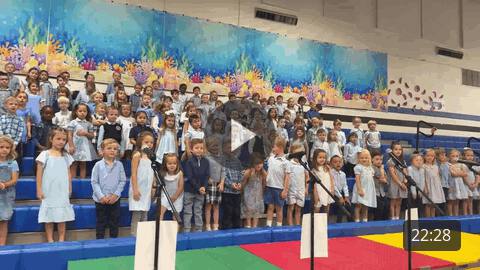


Select Date
<
2026
Select Categories
Trinity School of Midland
3500 West Wadley Avenue, Midland Texas 79707 - Email: info@trinitymidland.org - Phone: (432) 697-3281 - Fax: (432) 697-7403 -


© 2019 Trinity School. All Rights Reserved.
© 2019 Trinity School. All Rights Reserved.